How Guide Bars Influence Fabric Quality in Warp Knitting Machines
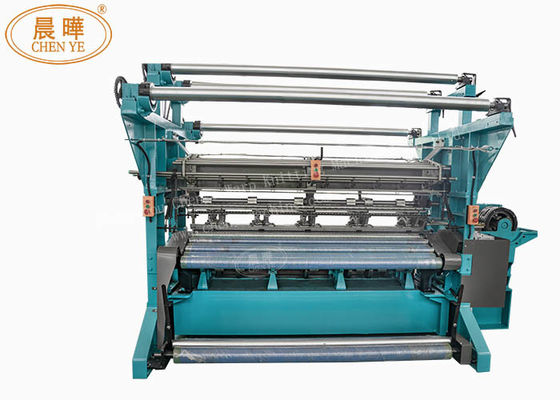
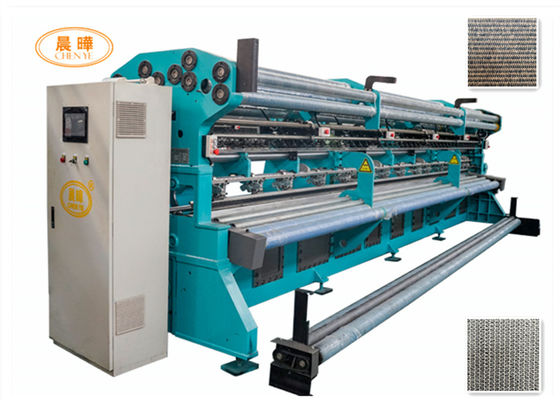
In modern warp knitting machines, every component plays a critical role in ensuring stable operation and consistent fabric production. Among these components, the guide bar system is one of the most important mechanisms responsible for controlling yarn movement and forming fabric structures. The precision and reliability of guide bars directly affect the quality, appearance, and performance of the final product.
What Is a Guide Bar?
A guide bar is a key component that guides yarns during the knitting process. Each guide bar contains numerous guide needles or guide elements through which the yarn passes. During machine operation, the guide bars move according to predetermined patterns, laying yarns around the knitting needles to form loops and fabric structures.
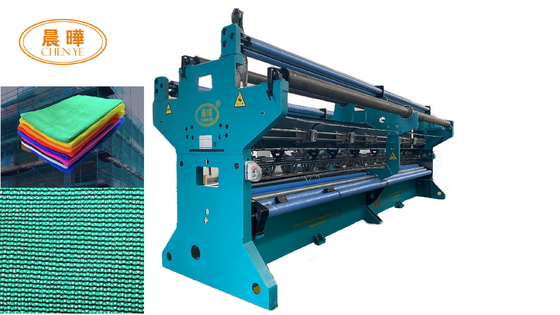
The coordinated movement of multiple guide bars enables the production of various net fabrics, including shade nets, bale nets, fishing nets, anti-hail nets, and safety nets.
The Function of Guide Bars in Warp Knitting
The primary function of the guide bar is to direct yarns accurately during each knitting cycle. By swinging laterally and moving according to specific lapping motions, the guide bars determine the structure and pattern of the fabric.
Even a minor deviation in guide bar movement can result in defects such as uneven mesh size, distorted fabric patterns, or inconsistent product quality. Therefore, guide bar precision is essential for maintaining production standards.

Precision Manufacturing for Stable Performance
At Chenye Warp Knitting Machinery, guide bar components are manufactured using high-quality materials and precision machining technologies. Strict dimensional control ensures smooth movement and accurate positioning during high-speed operation.
Advanced processing equipment helps achieve excellent mechanical accuracy, allowing guide bars to maintain stability even when machines operate continuously at high production speeds.
This precision contributes to consistent fabric structures and improved production efficiency.
The Relationship Between Guide Bars and Fabric Quality
The guide bar system directly influences several key fabric characteristics:
-
Mesh uniformity
-
Fabric strength
-
Surface appearance
-
Pattern accuracy
-
Dimensional stability
For products such as agricultural shade nets and bale nets, uniform mesh size is critical for performance. Accurate guide bar movement helps ensure that every section of the fabric meets the required specifications.
Supporting High-Speed Production
Modern warp knitting machines are designed to operate at increasingly higher speeds. As machine speed increases, the demands placed on the guide bar system become more challenging.
A well-designed guide bar mechanism offers several advantages:
These benefits help manufacturers maximize output while maintaining excellent product quality.
Applications in Net Manufacturing
Guide bar systems play an important role in the production of various net products, including:
-
Agricultural shade nets
-
Bale wrapping nets
-
Fishing nets
-
Anti-hail nets
-
Construction safety nets
Different products require different lapping movements and fabric structures, making guide bar accuracy a critical factor in meeting customer requirements.
Chenye's Commitment to Engineering Excellence
As a professional manufacturer of warp knitting machinery, Chenye continuously focuses on improving the design and manufacturing quality of every machine component. The guide bar system is carefully engineered to deliver smooth operation, accurate yarn control, and long-term durability.
Through strict quality inspection and advanced manufacturing processes, Chenye ensures that every warp knitting machine provides reliable performance in demanding industrial applications.
Conclusion
Although guide bars may appear to be only one part of a warp knitting machine, they play a decisive role in determining fabric quality and production efficiency. Accurate yarn guidance, stable movement, and durable construction enable manufacturers to produce high-quality net products with confidence. By investing in precision-engineered guide bar systems, warp knitting machine users can achieve greater productivity and consistent product performance.


 Your message must be between 20-3,000 characters!