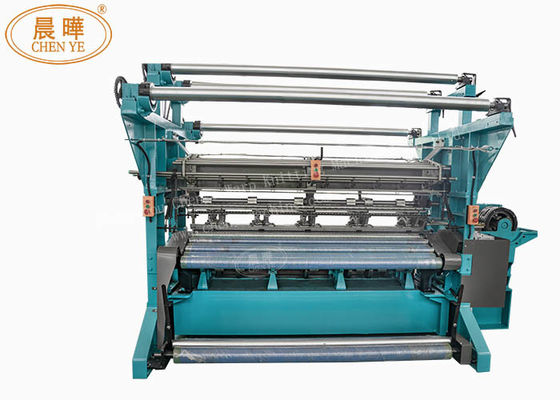
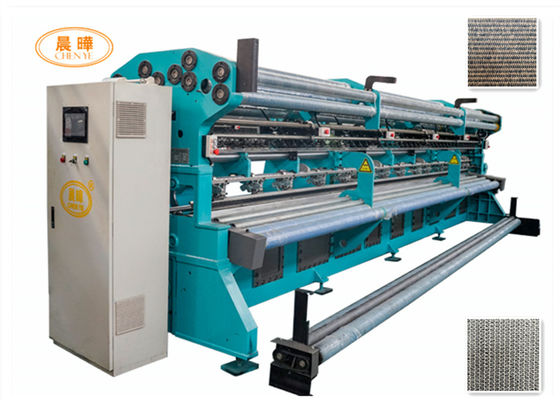
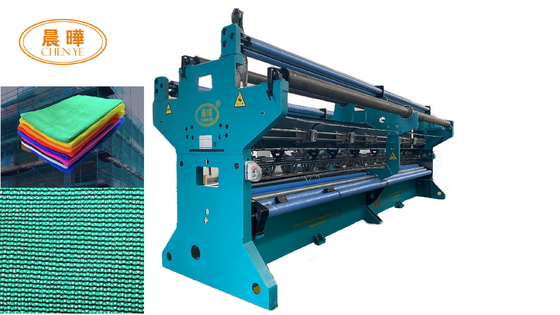
Selecting a reliable and professional warp knitting machine supplier is one of the most critical strategic decisions for textile manufacturers, as the quality, performance, and service of warp knitting equipment directly determine product quality, production efficiency, operational costs, and long-term market competitiveness. With the rapid upgrading of textile technology and increasingly diverse market demands, manufacturers can no longer rely solely on equipment prices to make choices. Instead, they need to conduct comprehensive evaluations from multiple professional dimensions to select the most suitable cooperative supplier.
First and foremost, it is essential to fully assess the supplier’s industrial production experience and core technical capabilities. Experienced suppliers with years of specialized manufacturing expertise have mature production processes, precise assembly standards, and in-depth industry insight. They are proficient in core technologies such as precise warp feeding, constant tension control, and synchronous looping motion, which effectively avoid common production problems like uneven fabric density and yarn breakage. In addition, professional suppliers maintain dedicated technical research and development teams, capable of optimizing machine structures and upgrading intelligent systems according to industry technological trends, ensuring that the equipment maintains stable performance and long service life in high-intensity continuous production.
Secondly, manufacturers need to strictly inspect the supplier’s product quality standards, official certification qualifications, and complete quality control systems. Qualified warp knitting machines must comply with international industry standards for production performance, operational safety, and energy conservation. Formal suppliers implement full-process quality management, including raw material incoming inspection, component precision testing, semi-finished product supervision, and finished machine debugging before delivery. Meanwhile, complete safety certifications and quality qualification certificates can effectively guarantee the stability and durability of the equipment, reduce the failure rate during operation, and help manufacturers produce standardized, high-quality textile fabrics that meet market access requirements.
Thirdly, comprehensive after-sales service and professional technical support are indispensable core factors for long-term stable equipment operation. Warp knitting machines belong to sophisticated industrial equipment, requiring professional installation and commissioning, operational training, daily maintenance, and timely fault repair. A reliable supplier provides one-stop after-sales support, including on-site installation and debugging, systematic operational training for employees, long-term stable supply of original spare parts, and 24-hour technical consultation and fault response. Timely and efficient after-sales support can minimize production downtime caused by equipment failures, reduce maintenance costs, and ensure the continuous and efficient operation of the production line.
Finally, priority should be given to suppliers who can provide personalized customized solutions to meet differentiated production needs. Modern textile markets feature diversified fabric styles, personalized pattern designs, and differentiated production specifications, and standardized universal equipment can no longer adapt to all production scenarios. Excellent suppliers can flexibly adjust equipment parameters, optimize functional configurations, and upgrade intelligent control systems according to customers’ targeted product types, production scale, and process requirements. Whether it is adjusting needle spacing, expanding weaving width, or adding intelligent monitoring and automatic adjustment functions, customized solutions can perfectly match customers’ actual production scenarios. In conclusion, a professional, high-quality, and service-oriented warp knitting machine supplier can effectively help textile enterprises improve production efficiency, stabilize product quality, reduce comprehensive operating costs, and ultimately enhance core market competitiveness in the fiercely competitive textile industry.


 Your message must be between 20-3,000 characters!