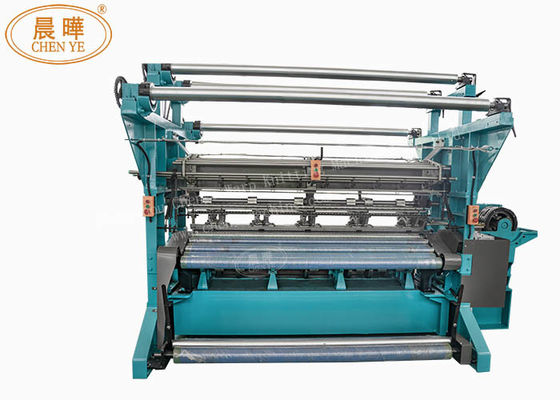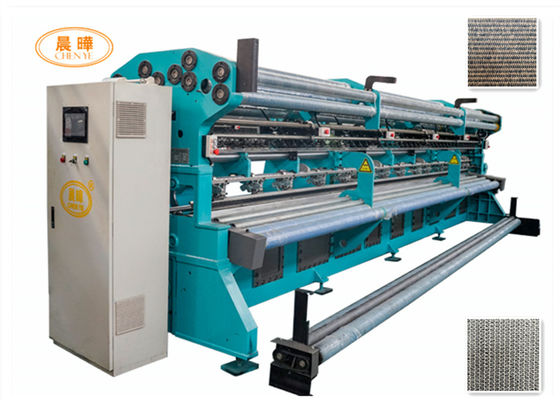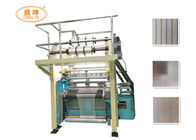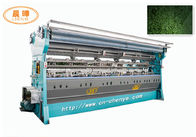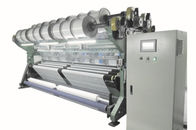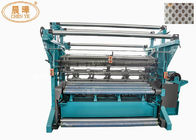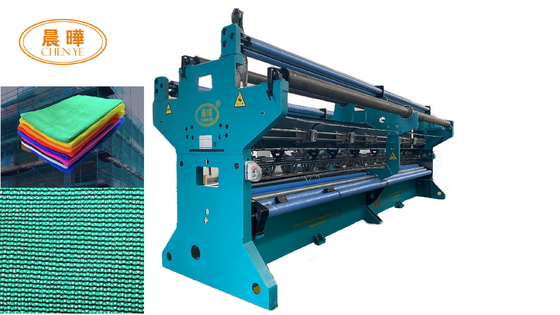
Net manufacturing requires specialized warp knitting machines capable of producing strong and durable mesh structures. Several machine models are widely used throughout the industry.
| Type | Size (L×W×H) | Weight (Kg) | Power (KW) | Speed (rpm) |
|---|---|---|---|---|
| SRCA-135 | 4300×2200×2700 | 4700 | 3 | 200-530 |
| SRCA-150 | 4900×2200×2700 | 5000 | 3 | 200-530 |
| SRCA-180 | 6100×2200×2700 | 7500 | 5.5 | 200-530 |
| SRCA-220 | 7300×2200×2700 | 9000 | 5.5 | 200-530 |
| SRCA-260 | 8200×2200×2700 | 11000 | 7.5 | 200-480 |
| SRCA-340 | 10300×2200×2700 | 14000 | 11 | 200-450 |
The RS180 model is suitable for producing smaller-width agricultural and packaging nets. Its compact design makes it ideal for medium-scale manufacturers.The RS220 model is commonly used for bale nets, agricultural nets, and packaging applications. It offers a good balance between production capacity and investment cost.The RS260 model is one of the most popular choices for shade net production, fishing nets, and protective nets. Its wider working width and stable operation make it highly efficient for commercial manufacturing.The RS340 model is designed for large-scale industrial production. With its increased working width and advanced configuration, it can meet the demands of high-volume net manufacturing.
When choosing a machine model, manufacturers should evaluate production requirements, target markets, product specifications, and investment budgets to ensure the best return on investment.
A suitable machine model can significantly improve production efficiency, product quality, and long-term business competitiveness.
![]()
![]()